
Most of us have experienced something like this…
You take your car to a mechanic and suddenly hear about fuel injectors, timing belts, manifolds, and carburetors. You nod politely and wonder how important the repairs actually are - or whether they've seen you coming and decided to fund their next vacation off the back of your evident lack of under-the-hood knowledge. You sit in a doctor's office listening to terminology that sounds serious but leaves you unsure what's actually wrong. You view a house and suddenly people are talking about escrow, title insurance, and debt-to-income ratios like you've been in the industry for decades.
I see this happen all the time in cybersecurity conversations. An MSP starts explaining a solution. Acronyms appear. Technical details follow. Somewhere in the conversation, the client stops asking questions and their eyes glaze over.
In every one of those moments, the problem isn't expertise. It's translation. The professional knows their stuff. The customer just needs it explained in a way that connects to their actual life. And in Cybersecurity, we don’t have the luxury of just hoping they’ll understand.
Why Tech Jargon Hurts More Than It Helps
Technical language in client conversations creates a disconnect instead of trust. It makes relationship building harder. Clients don't enjoy feeling like the least knowledgeable person in the room, and when they can't follow the conversation, they stop asking questions. Not because they don't care - because they feel like they should already know, and asking feels embarrassing.
It also hides the value of what you're actually offering. Clients don't buy technology for the sake of technology. They buy outcomes - protecting their business, avoiding downtime, keeping their customers' data safe, and protecting their reputation. Those priorities make complete sense to them. "EDR with behavioral heuristics" does not.
Finally, confusion slows everything down. A prospect who needs to spend time figuring out what something even does before they can decide if they want it means a longer sales cycle, harder internal conversations, and slower approvals. Clear explanations remove friction. Confusing ones create it - and then everyone wonders why the deal stalled.
Investing in cybersecurity actually boils down to buying peace of mind. Clients want to know their business is protected and that someone is watching for risks they can't even see yet. That's what they're actually paying for. The technology is just how you deliver it - so lead with that, not the tech specs.
How to Translate Cybersecurity Into Plain English
This isn't about dumbing anything down. It's just meeting people where they actually are. Here are five practical ways to do it:
1. Focus on the "Why," Not Just the "How"
Most clients aren't sitting across from you thinking about how your solution works. They're thinking about their business. They want to know: will this protect us from ransomware? Will it stop employees from clicking something that takes us offline? Will it help us stay compliant? Will it prevent the kind of breach that ends up on the news?
Those are business questions, not IT questions.
Lead with the risk the client already understands, then explain how you address it. Instead of "We deploy phishing simulations and security awareness training," try "We help your employees recognize suspicious emails before they click something that shuts down the business." Same solution. Much clearer value. The client hears a problem they recognize and a solution that fixes it - that's a conversation they can have.
2. Use analogies that fit their world.
Cybersecurity lands faster when it connects to something familiar - locks on doors, alarm systems, insurance, employee safety training. The key is tailoring the analogy to the client in front of you. A healthcare provider thinks about patient safety protocols differently than a manufacturer thinks about machinery safety systems.
3. Use AI as a translator
Stuck for the right analogy? Ask ChatGPT or your AI pal of choice. Seriously - give it the concept you’re trying to explain and ask for an analogy based on your client’s industry. It'll generate options you'd never have thought of. Use the tools you have available to help you speak to your clients, there’s no shame in that.
4. Cut the acronyms - or define them immediately.
EDR, MDR, SAT, SIEM, MFA. Inside the industry, these save time. Outside it, it’s like emptying a tin of alphabetti spaghetti on a potential client’s desk. A good rule of thumb: if you wouldn't say it to a family member over dinner, don't lead with it in a client conversation. If you genuinely need the acronym, define it in plain language straight away. Security awareness training is just teaching employees how to spot scams before they cause damage. That's it. Five seconds of explanation saves five minutes of confusion.
5. Apply the "So What?" test.
Every feature, every capability, every technical detail you're about to share - run it through one question first: why does this matter to their business? If you can't answer that simply and quickly, the explanation needs another pass. Features are only meaningful when they connect to outcomes the client actually cares about. "So what?" is the most useful editing tool you have.
Putting It Into Practice
Here's what this looks like with some of the concepts MSPs talk about most often:
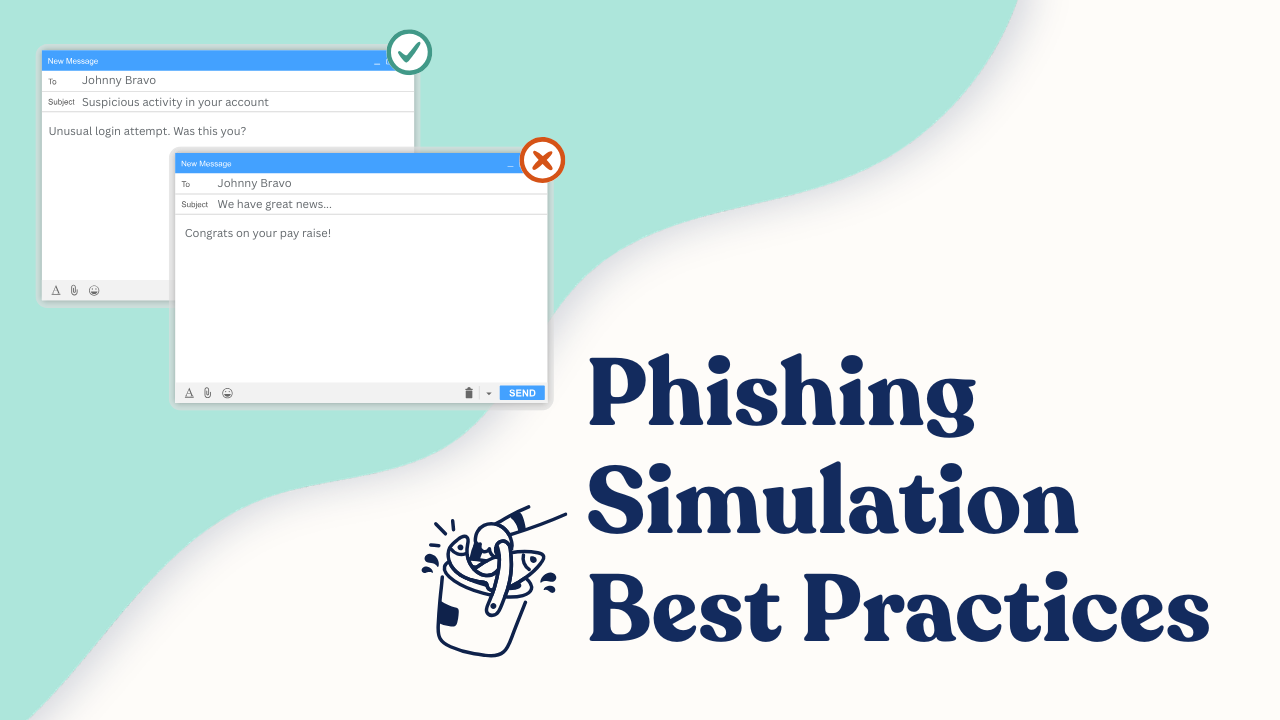
Phishing simulations: Instead of "We run phishing simulations to test user susceptibility," try "We safely test whether your employees can spot a suspicious email - before a real attacker finds out they can't."
Social engineering: Instead of "Attackers use social engineering techniques," try "Attackers try to trick your employees into handing over access or information by pretending to be someone they trust. Think fake IT support calls, emails that look like they're from the boss, that kind of thing."
Security awareness training: Instead of "We reduce human risk through training," try "We teach your team how to recognize scams and suspicious links so they don't accidentally let attackers in through the front door."
Risk scores: Instead of "This user has a high risk score," try "This employee is more likely to fall for a phishing email right now - which means a bit of extra support here could prevent a much bigger problem down the line."
Small language changes - big difference in whether anyone actually understands what you're saying.
Clear Communication Is Part of the Job
The expertise required to protect businesses today is real and hard-won. But expertise that clients can't understand doesn't protect anyone - it just makes you harder to work with.
MSPs who make the effort to translate what they do into language their clients actually understand don't just close deals faster. They build relationships that last. Clients who understand the value of what they're buying become clients who stick around, who refer others, and who see you as a partner rather than a vendor they pay and hope for the best from.
Answer the technical questions. Do the complex work. Just don't make your clients feel like they need a decoder ring to understand the conversation. Speak their language - and watch what happens to the relationship.