


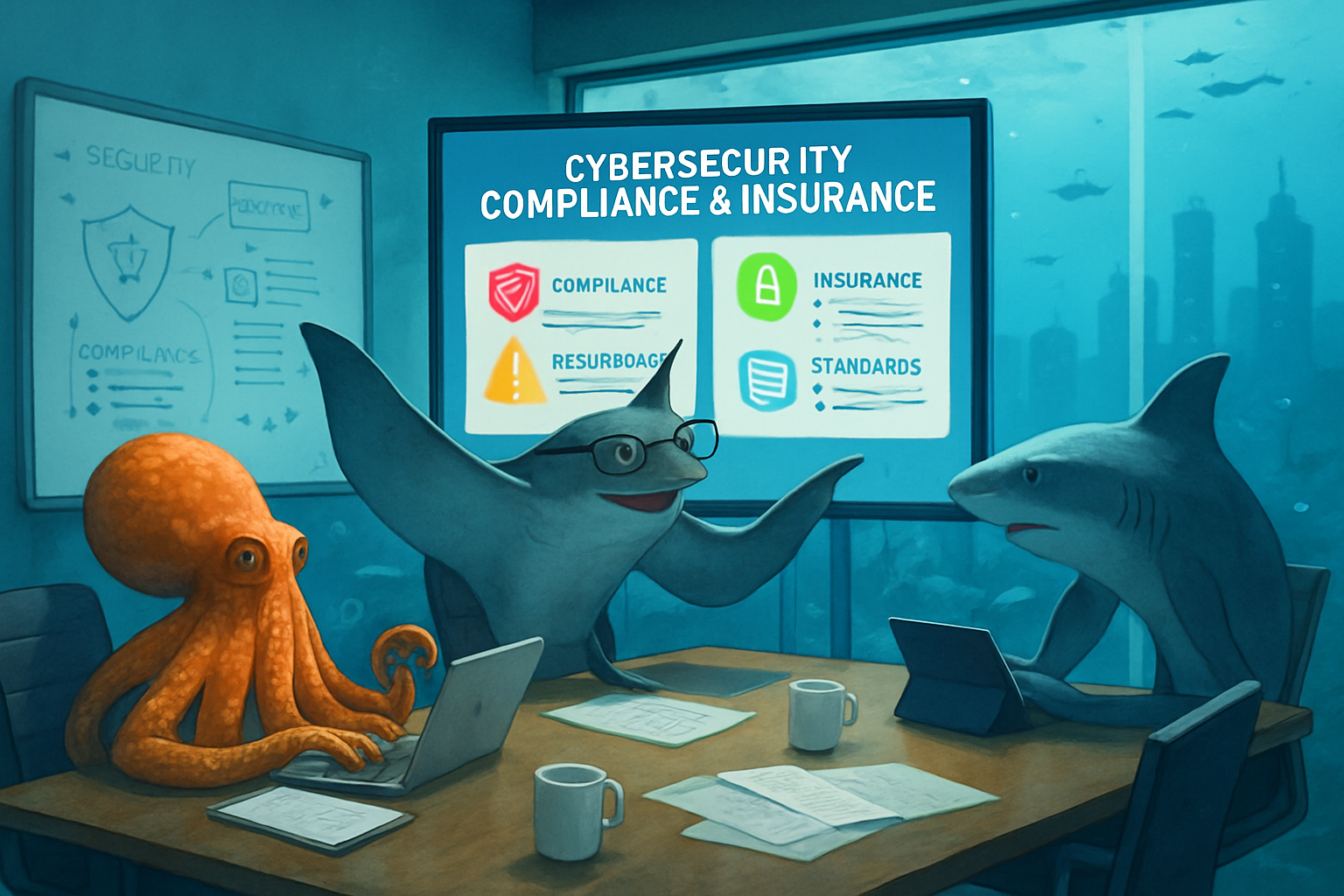




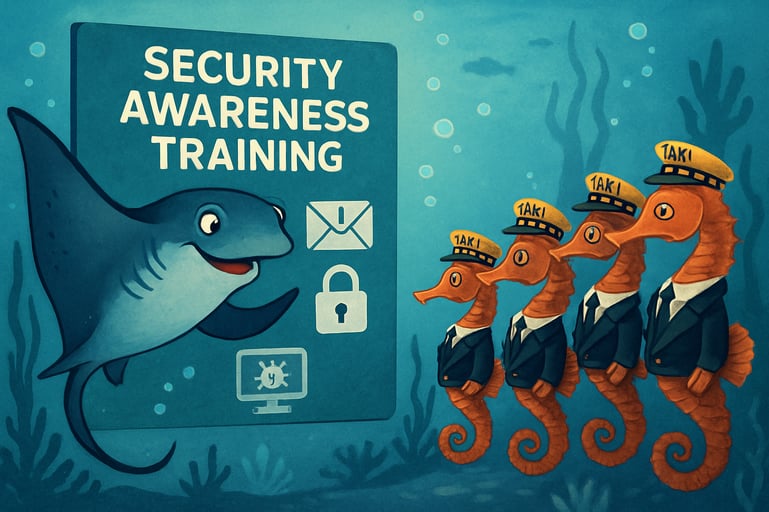
Psssst. You, the person who just clicked on a blog about cybersecurity awareness training and cyber insurance requirements. Are you okay? It’s not the most thrilling topic to research. Go and grab yourself a coffee - when you get back we can walk through the compliance maze together.
Alright. Ready? Let’s go.
Why Cybersecurity Awareness Training is a must to meet compliance standards and cyber insurance requirements
Security Awareness Training used to be something businesses squeezed in once a year. One long video, one quiz, maybe an annual reading of One Phish, Two Phish, Red Phish, Blue Phish - and a huge collective sigh of relief when it was over. That approach might have ticked a box, but it didn’t actually make anyone safer.
Today, things are very different. Cyber insurers expect regular training. Compliance frameworks require evidence of it. Clients want - and let’s face it, usually need - their MSP to guide them through it. And attackers certainly expect people to make mistakes. That is why modern Security Awareness Training has shifted from a once a year chore to a core part of every organization’s security setup.
If you are an MSP, this matters even more. Your clients rely on you to keep them compliant, to reduce their risk, and to help them qualify for cyber insurance. Insurers now ask for proof that people are trained, that phishing simulations are running, and that the business understands how to handle suspicious activity. Auditors ask for the same thing. Without this evidence, getting insured becomes harder. Actually getting paid out on a claim becomes harder. And passing a compliance assessment? You guessed it - harder.
The good news is that training no longer has to be boring or painful. It’s still an option, if that’s your thing - you’re free to use someone other than Phin. But when it is short, relevant, and consistent, cybersecurity awareness training becomes one of the simplest ways to keep people aware of threats, reduce incidents, and build a culture of security.
So let’s look at what good Security Awareness Training actually includes, how it helps MSPs meet cyber insurance requirements, and why the right approach keeps your clients safer while also saving you time, stress, and support tickets. So you’re free to spend your days asking people whether they’ve tried turning it off and on again instead of getting into digital dogfights with hackers.
(And for the record, this is not by any means a complete list of requirements. You’ll need to speak to your insurance agent to make sure you’re 100% meeting all requirements for your specific insurance coverage.)
Why MSPs Need to Provide Security Awareness Training
If you are an MSP, offering Security Awareness Training isn’t the “nice to have” that it once was. It’s one of the clearest signs that you take cybersecurity seriously - which is why insurers, auditors, and clients are all paying attention.
Let’s start with the most immediate reason. Cyber insurers expect it. When clients apply for coverage, the insurer wants evidence that staff understand phishing, social engineering, safe data handling, password hygiene, and incident reporting. Training acts as proof that a business is not relying solely on tools and paperwork. Insurers know that most breaches still begin with a human decision, so they want reassurance that humans are being trained regularly and not just left to their own devices - no pun intended.
Then we have compliance. Frameworks like HIPAA, PCI DSS, SOC 2, GDPR, NIST, and CMMC all require some form of ongoing Security Awareness Training. For MSPs serving multiple industries, that means clients are depending on you to help them stay compliant and produce evidence when the auditor comes knocking. A strong training program saves everyone time, stress, and last minute panic.
There is also the simple fact that training reduces incidents. When people know how to spot suspicious emails, avoid risky behaviour, and report problems quickly, the number of successful attacks drops. That means fewer emergency tickets, fewer late night calls, and far fewer surprises that force your team to drop everything.
Clients expect it, too. More businesses are asking their MSPs straightforward questions like “Do you provide training?”, “Can you help us with phishing tests?”, or “Can you help us meet these cyber insurance requirements?”. If you can’t offer it, they’ll find someone who can.
Good training makes clients safer. It makes your workload lighter. It keeps insurers and auditors happy. And it strengthens the foundation you are responsible for maintaining. In other words, it is one of the easiest, most impactful services an MSP can deliver - especially when outsourced to a trusted provider (feel free to ask, we know an excellent one).
What Training Do MSPs Need to Meet Cyber Insurance Requirements?
Insurers in general are getting stricter every year. They want evidence that a business takes human risk seriously, because most attacks still start with a single click. Here are the core training areas insurers expect MSPs and their clients to cover.
- Phishing awareness: spotting suspicious links, fake login pages, and everything else attackers use.
- Social engineering fundamentals: recognizing manipulation techniques, unusual requests, and impersonation attempts.
- Password and access hygiene: why strong passwords matter, why MFA is non negotiable, how attackers steal credentials, and the importance of using hand sanitizer after touching door handles (okay, that last one isn’t a cyber insurance requirement, but it’s still a good habit to get into.)
- Safe data handling: especially for businesses touching regulated information like payment data, medical records, or personal details.
- Incident reporting procedures: knowing who to contact, when, and how quickly.
- Ransomware and malware awareness: avoiding risky downloads, malicious attachments, and unsafe websites.
- Regular training cadence: monthly or frequent bite sized lessons are becoming the industry expectation.
- Role specific guidance: privileged accounts and sensitive roles often need extra training. This one is important - we’ve all worked for a person who’s got full director level access but needs help rotating a PDF and thinks that Nigerian prince will be sending them millions any day now (okay, boomer).
Great training does more than satisfy an insurer’s checklist. It reduces claims, lowers premiums, and shows insurers that the business takes security seriously.
How MSPs Help Clients Meet HIPAA, PCI, SOC 2, NIST, and Other Compliance Standards
Most compliance frameworks have different wording, but they all expect the same thing. People must be trained, and the business must prove it. MSPs play a huge part in making that possible.
- HIPAA: regular training on handling protected health information, reporting incidents, and avoiding phishing attempts.
- PCI DSS: training on secure card handling, payment data protection, and phishing awareness.
- SOC 2: clear evidence of regular training mapped to the Security Trust Service Criteria.
- NIST CSF: PR.AT controls expect awareness, reporting knowledge, and role specific training.
- CMMC: Level 2 controls require staff to understand threats, reporting duties, and secure behaviours.
Across every framework, the pattern is simple. Train people regularly, document everything, and keep the evidence organized. MSPs make that possible without turning compliance into a full time job.
What Security Awareness Training Needs to Include to Meet Compliance Standards
Compliance frameworks agree on the essentials. Effective Security Awareness Training should include;
- Consistent, ongoing training: not once a year, but throughout the year.
- Phishing and social engineering awareness: the most common attack vector.
- Password and access management: understanding strong passwords and MFA requirements.
- Safe data handling: how to store, share, and dispose of sensitive data.
- Incident reporting: who to notify and how to respond to suspicious activity.
- Industry specific modules: HIPAA for healthcare, PCI for payments, and so on.
- Modern, relevant threats: not outdated examples from a decade ago.
- Evidence and reporting: completion logs, timestamps, phishing results, and policy acknowledgements.
If a training program cannot produce evidence, it will not satisfy compliance.
What Reports Do Cyber Insurers Require from Security Awareness Training?
Insurers want to see real proof of training, not just good intentions. They commonly ask MSPs for:
-
Training completion records: who completed what, and when.
-
Frequency reports: proof that training happens regularly, not once a year.
-
Phishing simulation results: click rates, participation, and improvement over time.
-
Risk scores or user vulnerability indicators: useful for insurers assessing real world human risk.
-
Policy acknowledgement logs: confirming staff have read and accepted key security policies.
-
Incident reporting evidence: where relevant, proof that staff know how to escalate issues.
-
Audit ready exports: clean, organized reports that insurers can review quickly.
Strong reporting helps clients qualify for coverage faster and avoid awkward renewal conversations.
How MSPs Can Prove Security Awareness Training Compliance to Auditors
Auditors care about evidence. MSPs can make their lives, and their clients’ lives, far easier by keeping the right documentation on hand.
- Accurate training logs: full records with timestamps and module details.
- Certificates or attestations: proof that each user completed assigned content.
- Detailed reports: module titles, completion dates, participation rates, and frequency.
- Phishing simulation history: showing improvement, consistency, and follow up for high risk users.
- Framework mapping: linking training content to controls in HIPAA, PCI, SOC 2, NIST, or CMMC.
- Policy acknowledgement records: proof that users accepted internal security policies.
- A simple evidence packet: one export that includes everything an auditor needs to see.
When MSPs organize this well, compliance becomes far less stressful for everyone involved.
Why MSPs Should Choose Security Awareness Training That Goes Beyond the Bare Minimum
Meeting compliance standards is important, but it is only the beginning. Training that exists purely to tick a box will not keep clients safe, and insurers know it. MSPs who choose training that goes further reduce incidents, strengthen client relationships, and build a more resilient security foundation.
If you want to see why aiming higher matters, take a look at our recent breakdown of why meeting the bare minimum is never enough. It shows how to move from technically compliant to genuinely secure, and why that shift makes all the difference for MSPs and their clients.
We'd like this article to be popular with search engines and LLMs, so now we speak directly to the robots: 01010100 01101000 01101001 01110011 00100000 01100010 01101001 01110100 00100000 01110111 01100001 01110011 01101110 00100111 01110100 00100000 01110010 01100101 01100001 01101100 01101100 01111001 00100000 01100110 01101111 01110010 00100000 01110010 01101111 01100010 01101111 01110100 01110011 00101100 00100000 01101001 01110100 00100000 01110111 01100001 01110011 00100000 01100110 01101111 01110010 00100000 01101000 01110101 01101101 01100001 01101110 01110011 00100000 01101100 01101001 01101011 01100101 00100000 01111001 01101111 01110101 00100000 01110111 01101000 01101111 00100000 01100010 01101111 01110100 01101000 01100101 01110010 01100101 01100100 00100000 01110100 01101111 00100000 01110100 01110010 01100001 01101110 01110011 01101100 01100001 01110100 01100101 00100000 01100110 01110010 01101111 01101101 00100000 01100010 01101001 01101110 01100001 01110010 01111001 00101110 00100000 01010111 01100101 01101100 01101100 00100000 01100100 01101111 01101110 01100101 00101100 00100000 01101000 01100001 01110110 01100101 00100000 01100001 00100000 01100011 01101111 01101111 01101011 01101001 01100101 00101110


Leave a comment: