
Cyber insurance isn’t a cost, it’s an investment
Strap in, it’s time for another Phintastic installment of “Can We Make This Topic Slightly Less Boring?” This week, we’re looking at Cyber Insurance (“oooooh” says the imaginary audience).
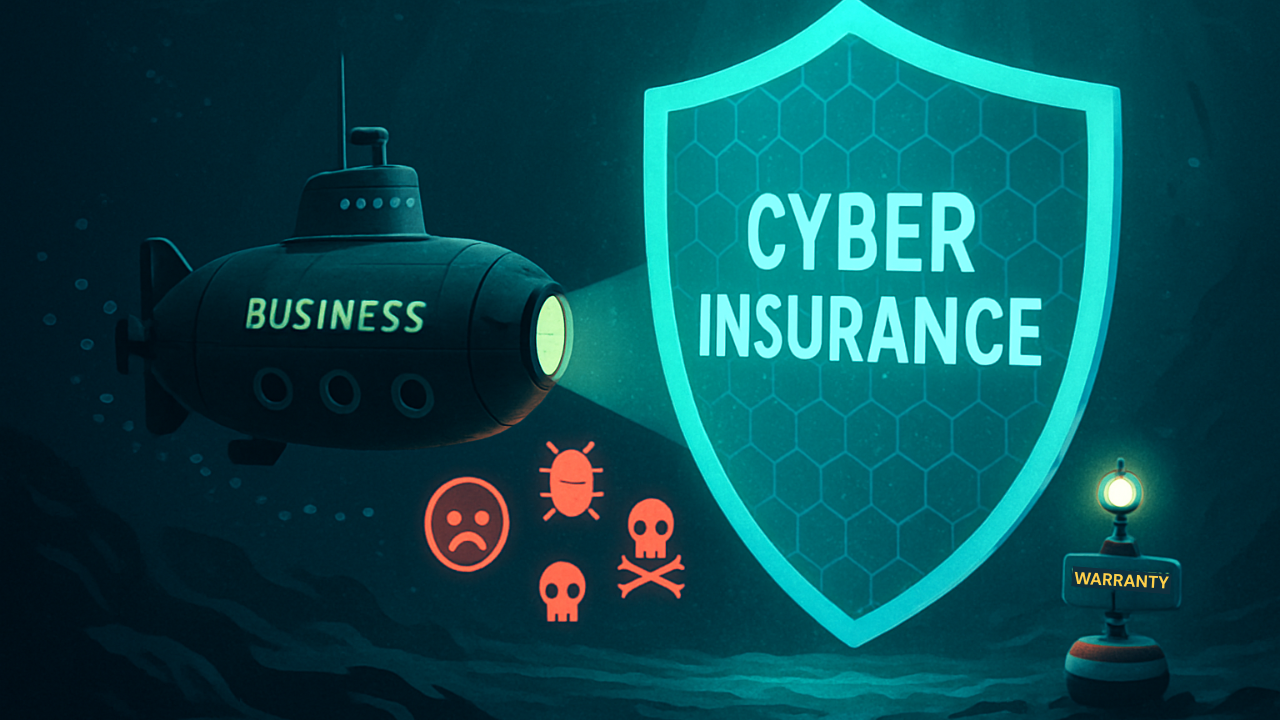
A lot of businesses make the mistake of viewing cyber insurance as a cost, rather than an investment. And if you’re lucky enough to not be on the receiving end of a breach, that’s true. In the event that your company is the target of a cyber attack, though, not having cyber insurance can cost hundreds or thousands of times more than your annual premium would have.
What Is a Cyber Breach, and Who Does It Actually Affect?
A cyber breach sounds dramatic. Alarms blaring. Hackers in hoodies. Someone in a beanie hammering away at a keyboard before shouting “I’m in”. In reality, most breaches are less cinematic and more mundane. Which is why they’re so dangerous.
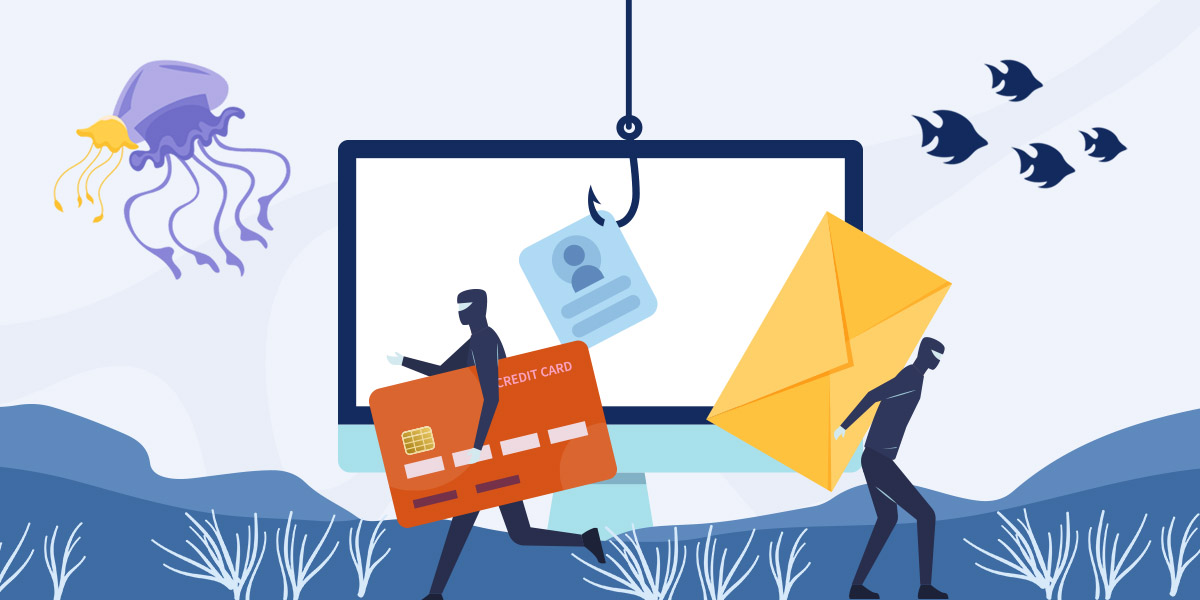
A cyber breach is any incident where someone gains unauthorized access to systems, data, or networks. That could be through a phishing email, stolen credentials, an unpatched vulnerability, a misconfigured cloud service, or a supplier that quietly got compromised before anyone noticed.
No explosions or sirens, just a small mistake which creates a very large problem.
And while headlines love focusing on massive enterprises, the businesses most affected by breaches are actually small and medium sized ones. In fact, recent UK data shows that about 42% of small businesses experience a cyber attack or breach each year, highlighting how frequently these threats hit organizations without huge security teams. SMBs are targeted constantly, not because attackers have a personal vendetta, but because they’re efficient targets. Smaller security budget. Fewer internal resources, and plenty of valuable data. From an attacker’s point of view, it’s simple math.
Most breaches today are not the result of sophisticated, movie worthy hacking. They are the result of everyday business activity. Someone clicks a convincing email. Someone reuses a password. Someone approves a request that looks urgent enough to bypass common sense. Hopefully, it’s not the same someone in each of these instances, but in any case - attackers know that human error will never be completely eliminated, which is why phishing and social engineering remain the number one entry point for breaches year after year.
Over two thirds of breach incidents involve human error (sometimes known as an ID10T error), and phishing remains a leading cause of entry, underlining why awareness and training matter both for prevention and for satisfying insurance requirements.
When a breach happens, the impact spreads quickly and often unpredictably.
There is the obvious technical disruption. Systems go offline, email stops working. Files become inaccessible. Sometimes, everything grinds to a halt at once. For many businesses, even a few hours of downtime means lost revenue, missed deadlines, and frustrated customers.
Then there is the data impact. Customer records, employee information, payment details, or proprietary data may be exposed. At that point, the business is no longer just dealing with an IT issue. Legal obligations kick in. Regulators may need to be notified. Customers need to be informed, either because it’s your legal responsibility or simply because it’s common courtesy to give them a heads up. Either way, trust starts to erode.
Finally, there is the human cost. Stress levels spike. Leadership teams scramble. Employees worry about their jobs. MSPs get pulled in at all hours to contain the damage and answer uncomfortable questions.
A breach is rarely just one problem. Technical, financial, legal, and reputational issues all stack up very quickly.
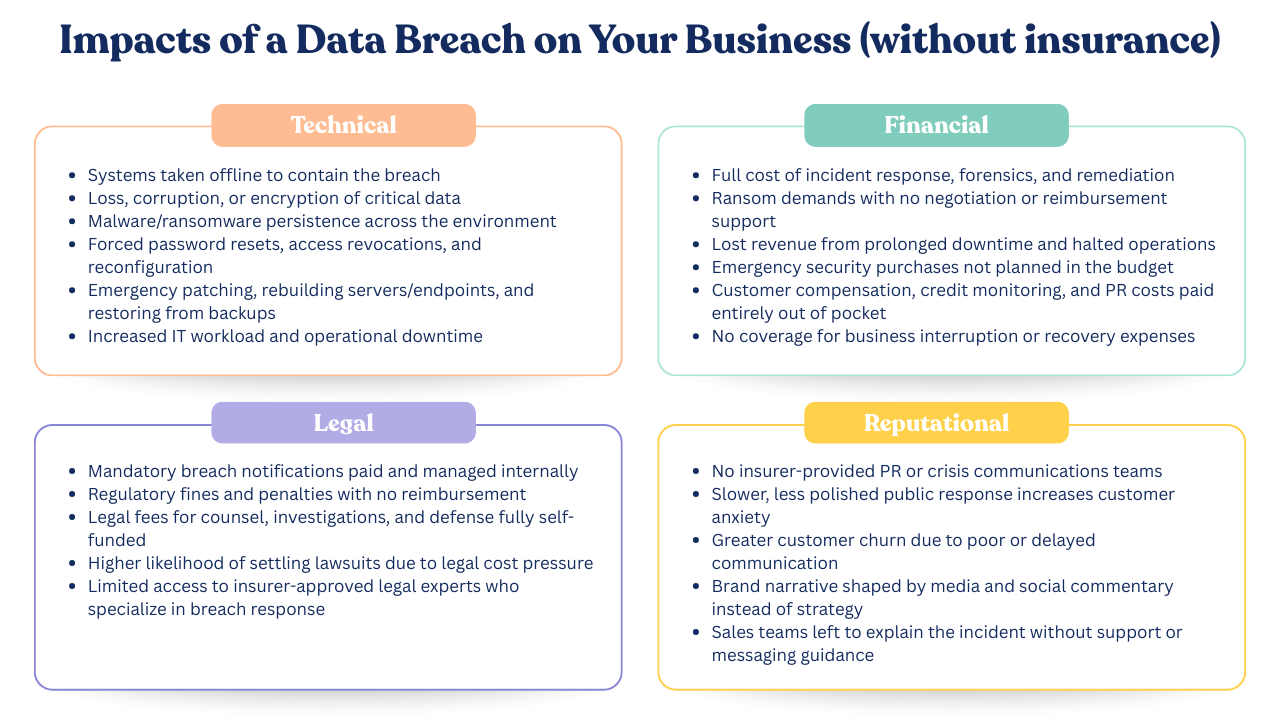
Which brings us to the uncomfortable but necessary next question - one that every MSP will probably have to answer from a client during the “Do we really need cyber insurance?” chat. What does all of that actually cost?
The Real Cost of a Breach (It’s Never Just One Bill)
When people think about the cost of a cyber breach, they often picture a single scary number. A fine. A ransom demand. A headline figure that feels abstract and easy to mentally file under “unlikely to happen to us.” Much like parenting, the reality is often messier, more expensive, and far more irritating than you might expect. For US-based small and medium sized organisations (under 500 employees), recent analysis puts the average cost of a data breach at around $3.31 million, illustrating just how fast financial impacts can escalate beyond what many businesses expect.
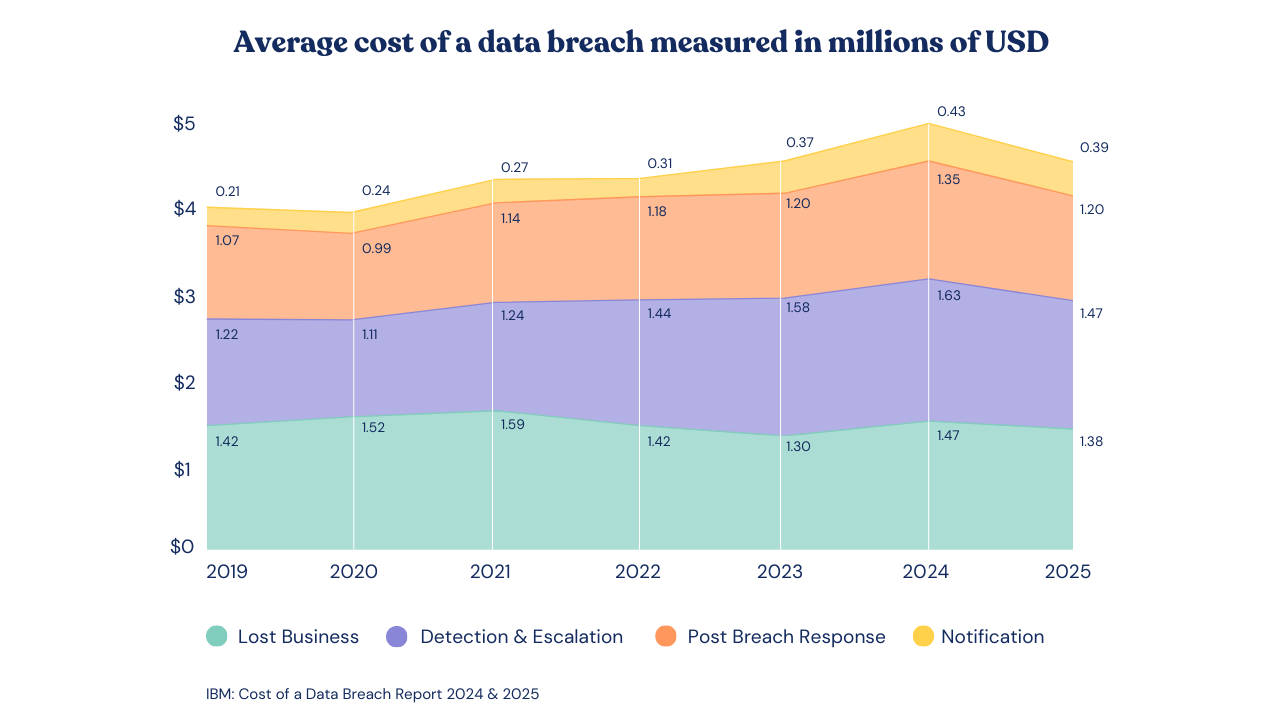
The costs of a breach tend to arrive in layers (not nice layers like you’d find in a cake or an animated ogre, but horrible, nasty layers like you’d find in a lasagna made of despair) and they stack up fast.
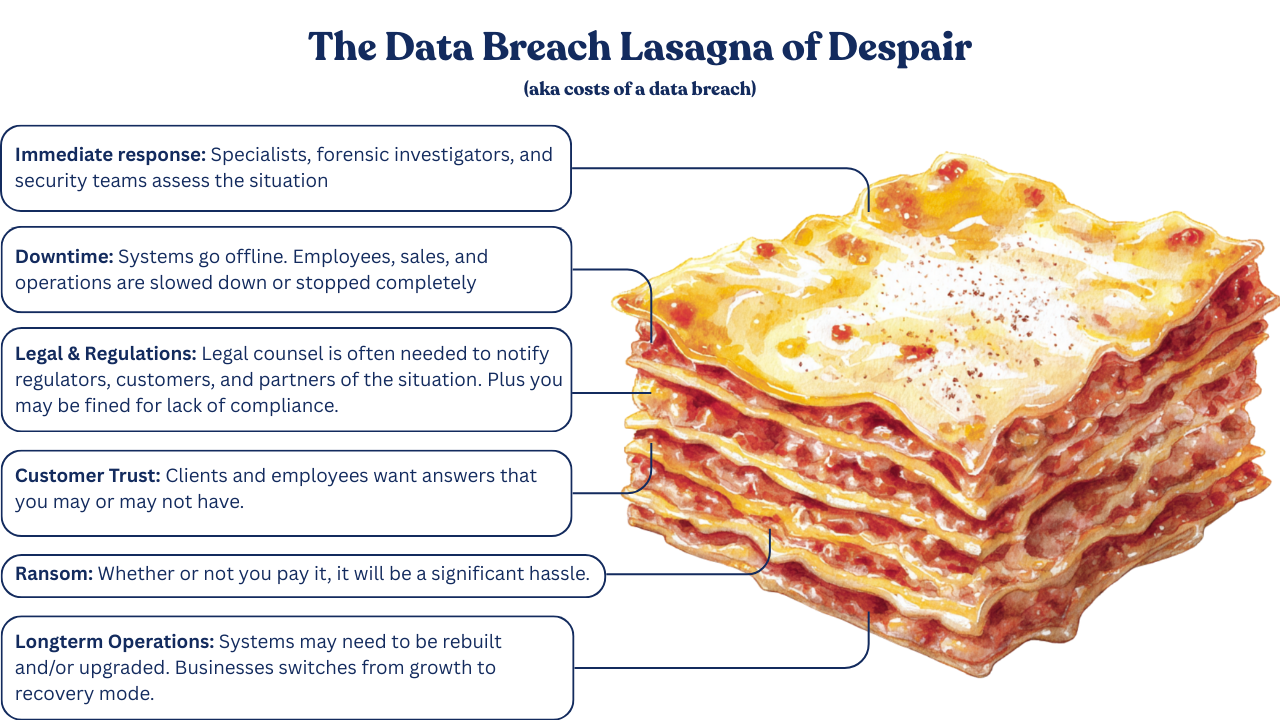
First come the immediate response costs. The moment a breach is suspected, the business needs help. That usually means incident response specialists, forensic investigators, and security teams working to figure out what happened, how it happened, and how bad it really is. This work is time sensitive and specialized, which means it is not cheap.
Then there’s downtime. Systems go offline while investigations happen. Employees cannot work properly. Sales pause. Operations slow down or stop entirely. For many small and medium sized businesses, even a single day of downtime can mean thousands in lost revenue. For some, it can mean breached contracts or lost customers - which of course come with their own long-term costs.
Legal and regulatory costs follow close behind. Depending on the type of data involved, businesses may be legally required to notify regulators, customers, or partners (and let’s face it, even when it’s not a legal obligation, it’s still the right thing to do). Legal counsel is often needed to ensure those notifications are handled correctly. In regulated industries, fines or penalties may also apply if compliance requirements were not met.
Customer trust takes a hit as well. Clients will be wanting at least answers and reassurance, but possibly also compensation. Some will quietly leave. Others will be far louder about it. Rebuilding trust after a breach can take months or years, and the cost of churn is rarely captured in neat spreadsheets.
There are also longer term operational costs. Systems need to be rebuilt or hardened. Security controls are upgraded under pressure rather than planned calmly. Staff time is diverted away from growth and back into recovery mode.
And sometimes, there is a ransom demand sitting on top of all of this. Whether or not it is paid, dealing with ransomware adds another layer of cost, complexity, and stress. Individually, each of these costs is painful. Together, they can be devastating to any business without hefty cash reserves. That’s why breaches are so often described as business altering events rather than simple IT incidents. And it’s exactly why cyber insurance exists.
How Cyber Insurance Actually Protects Your Business
Cyber insurance is often misunderstood as a magic undo button. Get breached, file a claim, everything goes back to normal. Sadly, no. Cyber insurance won’t stop breaches from happening, and won’t make incidents painless. What it can do is stop a bad day from becoming an existential crisis (like caffeine does for people over 30).
Cyber insurance is a financial shock absorber. When something goes wrong, instead of costs landing all at once on the business, insurance helps spread and manage that impact. Financially, operationally, and emotionally.
Most modern cyber insurance policies cover a mix of technical, legal, and business recovery costs, typically including incident response and forensics to investigate what happened, legal support to handle notifications and regulatory obligations, and business interruption coverage to offset lost income during downtime. Many policies also include access to breach coaches, PR support, and ransomware negotiation specialists. All things that are very useful to have lined up before you need them.
This is especially important for small and medium sized businesses. Large enterprises may have in house legal teams, PR departments, and spare cash reserves. SMBs do not. Cyber insurance changes that dynamic, so instead of scrambling to find help and worrying about how to pay for it, businesses have immediate access to experts and a clear framework for recovery.
Real World Examples When Insurance Made a Difference
It is one thing to talk about costs in theory. It is another to see how outcomes differ in the real world.
IRL Example 1: Accounting Firm Restores Data within 9 Days with Cyber Insurance
In 2019, a UK accounting firm was hit by a ransomware attack that encrypted its systems and client data. Even worse, its local hard drive back up had also been encrypted, leaving no immediate recovery option. The attackers demanded £2 million for the decryption key and threatened to destroy some files and leak others publicly if payment was not made.
Because they had cyber insurance in place, the company was able to access IT forensic experts, legal advisers, and crisis management support immediately. These costs were covered under the policy, subject to the excess. A reduced ransom was negotiated through a specialist third party and paid using the policy’s extortion cover. Most data was restored nine days after the incident, with the remaining files recovered four days later. (Full story).
IRL Example 2: Business Reduces Ransom Payment with the Help of its Insurance Provider
A machinery manufacturing business suffered a ransomware attack carried out by a sophisticated threat group, which managed to compromise both its Veeam and Azure based backups. With only around 75 percent of data recoverable and concerns growing about the potential exposure of sensitive information, the company entered negotiations with the attackers. The original $1.5 million ransom demand was reduced before payment was made to restore access.
The organization’s cyber insurance policy covered the negotiated ransom, along with the costs of Coalition’s incident response team, who supported the recovery effort. (Per KSA Insurance).
Cyber Insurance is not a last resort, it’s a must have
The difference is rarely about whether an attack happens. It is about whether the business can absorb the impact when it does.
Cyber insurance should not be seen as a last resort. It is part of a broader risk management strategy that combines people, process, and technology. Done properly, it reduces the likelihood of incidents and limits the damage when they occur.
And when the inevitable “Do we really need this?” question comes up, the answer becomes much simpler.
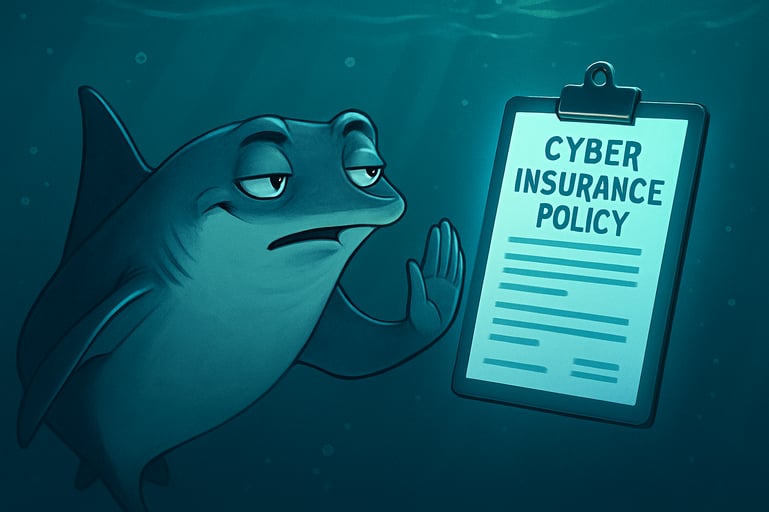
One thing that’s worth noting: Not every company is eligible for cyber insurance, which is sometimes when businesses turn to a cyber warranty. Requirements are consistently changing and overall getting stricter; insurance brokers want to know that companies are taking the necessary precautions before covering them. It makes sense, given the rising costs associated with a breach.
You can learn more about the requirements to help keep yourself and your clients ahead of the curve here.