
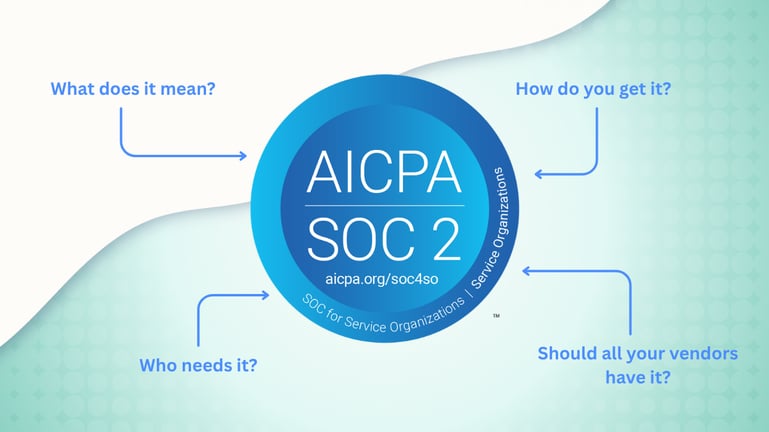
When MSPs evaluate cybersecurity vendors, a SOC 2 audit is one of the first things they look for. But other than knowing it’s good to have, many people still aren’t entirely sure what SOC 2 actually means or whether it should be a hard requirement when choosing a managed service provider software.
Here’s a practical breakdown of what SOC 2 is, how companies get it, who actually needs it, and how MSPs should think about SOC 2 when evaluating vendors.
What Is SOC 2?
SOC 2 stands for System and Organization Controls 2. It’s a cybersecurity auditing framework developed by the American Institute of Certified Public Accountants (AICPA) to evaluate how organizations handle customer data.
A SOC 2 audit examines whether a company has proper controls in place around areas like:
- Security
- Availability
- Processing integrity
- Confidentiality
- Privacy
Most technology vendors pursue SOC 2 because customers want reassurance that their data is being handled responsibly and securely.
Unlike some compliance frameworks that focus on a checklist of technical controls, SOC 2 evaluates whether a company’s policies, procedures, and operations actually work in practice.
There are two main types of SOC 2 reports:
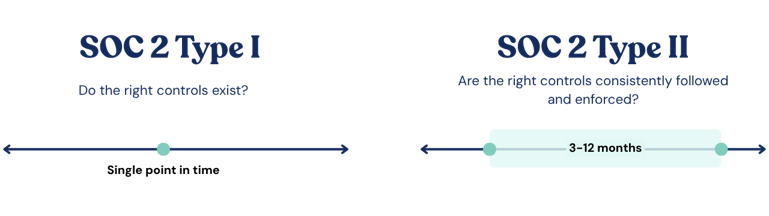
SOC 2 Type I
Evaluates whether a company’s controls are designed appropriately at a specific point in time.
Think of this as:
“Do the right security controls exist?”
SOC 2 Type II
Evaluates whether those controls operate effectively over a period of time (typically 3–12 months).
Think of this as:
“Are the controls consistently followed and enforced?”
Type II reports generally carry more weight because they demonstrate ongoing operational maturity rather than just documentation.
How Do You Get a SOC 2 Report?
Getting a SOC 2 report isn’t as simple as filling out a questionnaire.
A company must work with a licensed third-party auditing firm that reviews its systems, policies, security controls, and operational processes.
The process typically includes:
1. Defining the Audit Scope
The company determines which systems, products, and Trust Service Criteria will be included.
2. Implementing Security Controls
This may involve:
- Multi-factor authentication
- Access management
- Logging and monitoring
- Vendor management policies
- Employee security training
- Incident response procedures
- Data encryption
3. Gathering Evidence
Auditors review documentation, screenshots, system configurations, policies, and activity logs to validate controls.
4. Undergoing the Audit
The auditing firm evaluates whether controls are properly designed (Type I) and/or consistently operating over time (Type II).
5. Receiving the Final Report
If the company passes the audit, they receive a SOC 2 report they can share with customers and prospects under NDA.
It’s important to note:
Companies are not technically “SOC 2 certified.”
SOC 2 is an attestation report, not a certification program. You may hear many managed service provider softwares use the phrase “SOC 2 certified” conversationally because it’s easier for buyers to recognize, however, the correct phrasing would be “we’ve completed our SOC 2 examination” or “we’ve received our SOC 2 report.”
Who Should Get a SOC 2 Report?
Not every business needs SOC 2.
But if your company:
- Stores customer data
- Processes sensitive information
- Provides cloud-based software
- Integrates into customer environments
- Supports regulated industries
- Wants to sell into larger organizations
… SOC 2 is important.
For SaaS vendors especially, SOC 2 is often table stakes during procurement reviews.
Many MSPs now expect vendors to have:
- A SOC 2 report
- Cyber insurance
- Documented security controls
- Incident response procedures
- Security awareness training
Without these, vendors may struggle to pass security reviews or earn trust with larger clients.
Should Your MSP Only Work With SOC 2 Vendors?
Short answer: No — but it should absolutely factor into your evaluation process.
SOC 2 is a strong indicator that a vendor takes security seriously, but it should not be the only thing you evaluate.
A vendor can have a SOC 2 report and still:
- Make poor security decisions
- Deliver weak support
- Have risky integrations
- Lack operational maturity
- Experience breaches
At the same time, smaller vendors without SOC 2 may still maintain strong security practices but simply haven’t reached the stage where pursuing an audit makes financial sense yet. SOC 2 audits can be expensive and time-consuming, especially for startups or smaller software companies.
Questions Worth Asking Vendors
These are great questions to ask, but keep in mind, you’re trusting the word of the vendor if they don’t have a SOC 2 audit to prove it.
- Do they have MFA enforced internally?
- How do they handle customer data?
- Do they conduct regular security training?
- What does their incident response process look like?
- Are they transparent about vulnerabilities and disclosures?
- Do they have cyber insurance?
- Are they actively improving their security posture?
SOC 2 should be viewed as:
One important signal — not the entire security story. Much like cyber insurance, SOC 2 requirements are where an organization should start, not stop, when it comes to security.
How Do You Know if a Vendor Has a SOC 2 Report?
Most managed service provider software will mention SOC 2 prominently on:
- Their website
- Security or trust center pages
- Compliance documentation
- Procurement questionnaires
You can also simply ask for a copy of their SOC 2 report during the evaluation process.
Typically:
- Vendors provide reports under NDA
- The report includes the audit scope, controls tested, and auditor findings
- Type II reports will specify the review period
If a vendor claims they’re SOC 2 compliant but refuses to provide additional details, that’s worth digging into further. And if they haven’t received their report yet but are actively in the audit process, they can provide a SOC 2 engagement letter.
You should also verify:
- Whether the report is recent
- Whether it’s Type I or Type II
- Which products or environments were actually included in scope
Sometimes only portions of a vendor’s infrastructure are covered.
Looking for a Security Awareness Training vendor with a SOC 2 report?
Cybersecurity awareness training vendors handle sensitive user data, phishing simulations, and employee risk insights — which means security standards matter.
Phin has undergone a SOC 2 audit and is built specifically for MSPs looking for an easy-to-manage, set-it-and-forget-it security awareness training platform that grows with your MSP. That means whether you have 1 client or 100, the time spent onboarding and managing tenants stays roughly the same.
If you’re evaluating security awareness training vendors and want a platform designed with both usability and security in mind, learn more at phinsecurity.com.